Showing posts with label Globalization. Show all posts

Sunday, February 28, 2021

Great Teachers

I've been thinking recently about some of the great teachers my children have had. There have been many. There was the kind elementary teacher who would play guitar and sing with the kids and bring her dog in to visit as a reward. There was the history teacher who regularly traveled with the kids to a national history competition or the science teacher who did the same for a large science event. There's the band and orchestra teachers who share their love of music with a new generation of musicians. There is the English teacher who stepped up to make a school musical happen when no one else would. There's the one who runs the birding club.

Then there's our school system that has been traditionally built around core subjects that are not as relevant as might think they would be, given the emphasis placed on them. There is the push for measurements and accountability of teaching, learning, school quality, etc. This push at times results in an educational industrial complex where large centralized assessment companies sell their assessment services to school districts to help them measure student performance and then at the same time they also sell the key in the form of study materials that make it easy for teachers to teach to the test and give students the ability to perform well on the matching assessments.

Then there's the COVID-19 pandemic which has forced a harder look at what is or isn't important, what can be cancelled, what can be postponed, what should still go on, and so on. The big question is whether we will take advantage of the pandemic to undo the maddening assessment culture we have built and focus on what is really important. Universities need easy ways of measuring who to give scholarships to (GPA and ACT/SAT scores), but they have been willing to bend the rules and find other ways to reward students who were not able to take standardizes tests due to the pandemic.

What if we stopped focusing so much on some of the mostly irrelevant topics like calculus (relevant to engineers but not many others) and pushed more for creativity and travel and experiences and useful projects and actual skills? What if we pushed to teach our kids languages, cultures, how to serve others, and be generally good people? At some point there can and should be exposure to some topics that may spark a desire to go on and become a great scientist or mathematician, without forcing those who don't need those skills to waste time focusing on something they will quickly forget anyway.

What if we explored nature and performed music and built things?

Sunday, May 31, 2020

Unrest

Can't we all just get along?

This paraphrased quote from Rodney King back in 1992 still echoes 28 years later. Think of how much has changed in that time. How much has stayed the same?

Wars have been waged, the internet and mobile phones have transformed communication and how businesses operate, 5 U.S. presidents have served, reality TV shows (or unscripted dramas) have shifted the entertainment landscape, hip hop music has become mainstream music, and much more.

One of those presidents was our first African American president, and the hip hop music that has dominated the last couple decades was created by and is primarily still performed by people of color. But where has that really gotten us?

More and more people of color are killed in the streets. Riots break out across the country as part of protests against racial divisions and atrocious acts committed by police and everyday citizens. Perpetrators are rarely brought to justice. White America is barely aware of the existence of our own privilege.

A pandemic seems to have lowered defenses, opened doors, unified us against a common enemy, and squeezed out all but the essential from our lives. And in the middle of the pandemic with no end in sight we have race riots and protests, burning police cars, looting, a president who seems to provoke more than promote calm, and more to come as the disadvantaged are stressed by an economy in shambles. Race continues to divide us as the pandemic should be uniting us.

Can't we all just get along?

Thursday, December 22, 2016

Confirmation Bias

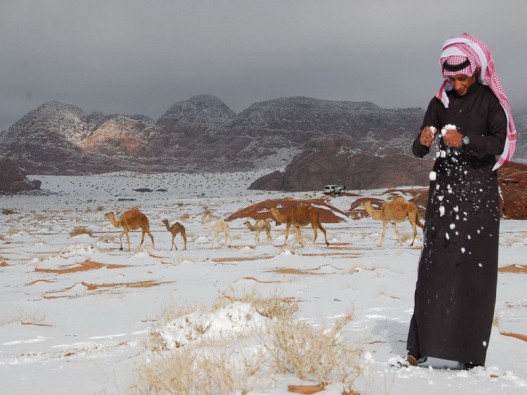
This has been a different year. Even halfway through the year people were talking about how crazy 2016 is, and it hasn't disappointed. From the many celebrity deaths such as Gene Wilder, Prince, and Alan Rickman (many more, not a comprehensive list) to the Cubs winning the World Series to Donald Trump winning the presidency to snow in the Sahara Desert, it's been a wild ride.

I don't like doing year end reviews before the year is over, because crazy or amazing things can happen all the way through the 31st of December. Those who created their lists during the first half of December would have missed the last item I pointed out above - snowfall in the Sahara:


Crazy! Beautiful, but crazy! Of course taking it to social media, the crazy takes a different turn. Instead of just enjoying the crazy beauty of nature, it turns into a political discussion related to climate change. And of course everyone sees just what they want to see. Those more concerned with the environment point this out as an indicator of climate change, and those more concerned with government overreach point this out as an argument against global warming. I will say that from a scientific point of view, the idea that global warming could not lead to snow in a place that is usually hot is actually a little backwards. Theoretically, global warming can lead to more moisture in the air, which can lead to snow, so it's not just about the temperature itself, which is part of why the other side has started referring to it as climate change instead of global warming. That doesn't stop me from making jokes when it's 10 degrees outside about how much I'm looking forward to global warming.

The issue is that neither side is really supported by this isolated event. Whether or not climate change or global warming is a thing, snow in the Sahara does not make or break either case. A consistent pattern one way or the other would lead more toward something measurable, but it's a rare enough event that I don't think we have enough information. It also snowed in 1979:


And if you look around there are reports of possible snow in the Sahara in 2005 and 2012. Four times in over 40 years hardly a pattern makes for either side.

Rather, what we have is a clear pattern of confirmation bias. Confirmation bias is when a person has an idea they hold to be true, and any evidence they see is molded around their world view to help them confirm what they already believe to be true. One side thinks the snow proves man is changing the world's climate, and the other side thinks the snow proves that we are not.

This is what in statistics we would call an outlier. The problem with outliers is that sometimes we ignore them because they are such a strange occurrence that it ruins our simple model even though it's important to consider what would cause that extreme case. The other problem with outliers is that sometimes we focus too much attention on them and treat them as if they are regular cases instead of just abnormal phenomenon. Statistically speaking it probably should snow in the Sahara once every couple decades.

Confirmation bias is related to cognitive dissonance, which is the idea that when confronted with conflicting evidence contrary to our existing view, the tension must somehow be resolved by either dismissing the new evidence or by adjusting it (often subconsciously) to fit the previous belief. For example, I haven't said if I think climate change is a thing or not, but people with strong beliefs one way or the other will tend to have one of two responses to what I've written. They will either apply what I've written about how this doesn't prove anything just to the other side's argument if they believe what I'm saying or if they don't like what I'm saying they will read it as though I agree with the other side and say that I'm actually wrong about the weakness of the evidence.

Think through what I've written and by identifying how you react to my position that the snow doesn't mean as much as you think it means may help you understand where your own biases are positioned. Only by recognizing and understanding your own bias can you do anything about it.

Friday, September 28, 2012

International Economics

International econ is an important extension of economics, one of the more important subjects we learn about in business. I'm not quite sure I got everything I could have out of this particular course, due to some peculiarities of its delivery.

The first peculiarity is simply that it was a summer course. Of course, I love summer courses for their intense, focused nature and then how quickly it's over. The second peculiarity was related, kind of. The related part was that it was summer, very hot, and the cooling system in the Natural Resources building where we were meeting went out.

At least one day class was cancelled due to the heat and probably HVAC technicians working on the problem. One day we met outside. We just sat around on the ground - grass, cement, whatever - and talked as other people walked by and our voices floated off to nowhere instead of bouncing back off the wall in the strangely shaped auditorium (extra steep and building support pillars blocking the view from some seats. Several days were spent with industrial strength fans blowing on us, drowning out part of the conversation. If it wasn't a compressed summer course, missing a day wouldn't have put us behind so far, plus it probably wouldn't have been as hot, and there would have been more days in between to get it fixed before the next time we met.

Getting to the actual content of the course, I think we would be better off as a country if more of us really understood these concepts. We hear about issues with other countries like Greece not being able to pay their debts but don't really understand how that affects us. We talk about manufacturing jobs being sent to China, but what does that do other than send some of our jobs there?

As interconnected as the world market is, everything we do affects others. Our stock exchange may close but another one on the other side of the world is opening. Arbitragers are constantly trolling for pennies of difference in exchange rates in different markets in order to run a pile of money through both markets and capitalize on the difference. We want free trade, yet some tariffs help protect jobs in our country in order to ensure we don't lose critical skills and become dependent on others.

Listening to the political debates currently going on, there are expectations that the president or other political leaders have much more control over world events than they actually do. You can't instantly create millions of jobs like Obama claims he can do. Romney's claim that he can stabilize our economy by helping people in other countries start businesses likewise sounds nice, but is a fairly unmeasurable long term plan that depends on a lot of factors to come together.

We listen to statements from everyone running for office, and it's hard to separate what's realistic or not without a firm understanding of the principles that affect international trade. The real improvements in worldwide economies can only come through many sides working together in the long term, following sound economic principles. No one is really interested in that as they focus instead on squeezing a couple cents profit times thousands or millions of dollars or shares of stock traded while markets are synching.

photo by carderel

Friday, September 30, 2011

Business Spanish

Business Spanish was different than any other Spanish class which I have taken in that there was a point to it. I say that kind of flippantly, of course. I have enjoyed the various classes I have taken over the years, but most of them lack a real context of learning a language for a specific reason.

I remember in one of the earlier classes I had taken having a discussion about why we were learning the words we were learning. What's the big deal about learning the words for family relationships, food, types of vehicles, and rooms in the house? We did come to the conclusion that it's probably because those are common things around us in everyday life. You don't go very far without encountering a door, needing to eat, or having to find a bathroom.

In learning a language for a business context, there were reasons for learning more advanced, nuanced words and phrases other than a laying-around-eating-apples-by-the-pool-in-your-cousin's-backyard context. One of the most useful skills would have to be writing an appropriate business letter, which is hard to do in any language.

This class would actually be followed up the next semester by a Business Communication course (in English), which was also very helpful in learning many rules of grammar and writing business correspondence. It's sort of interesting that it's the first course I've ever taken in another language before taking the same course in my native language.

Something more applicable to my college career generally is that this was the first, and only, course I've ever taken as Pass/Fail, if that wasn't the only option. I had learned about the Pass/Fail option long after it would have been really useful to me. I still don't understand why that isn't one of those things they train freshman on in university orientation.

I was enjoying this class. I thought I was learning a lot. The teacher was tough, but it was interesting. Then the midterm hit. It destroyed us. Everyone in the class just bombed it. The professor was not happy about it. Everyone was stressed out about it. I think a few people dropped. I looked into the option to change to Pass/Fail, and it looked like it might work. I talked to everyone I could find in the department to make sure they would still accept the course for my minor in Spanish if it was not graded.

Everyone agreed I could, so rather than fight with my grade in the class, I changed to Pass/Fail. The tricky thing is that it's technically P/D/F, not just Pass/Fail, so if you earned a D, you'd still get a D on your transcript. By this time, I had recovered from my freshman year and had a decent GPA going, so even a B would pull me down, and it seemed worth the switch. I was pretty certain I wasn't going to get a D, but above that I had no idea.

In the end, I totally don't know if it was worth it. I mean, it was, because it caused me a lot less stress, but I have no idea what grade I would have earned in the class. I have no idea what grade my fellow classmates earned. I don't know if she applied any type of curve or graded it straight. All I knew is that I got some peace of mind, and I got to try out the Pass/Fail option.

Thursday, February 17, 2011

A Whole New World

Last month, I mentioned how sometimes people will fight against something and by so doing cause what they were trying to avoid in the first place. Here is a similar example, this time of people arguing against something and thus making the point they were arguing against.


At East High School in Salt Lake City (yes, THE East High School), they are putting on a bilingual production of Aladdin. I think it's a great idea. Basically, half the school is Caucasian, one quarter Hispanic, and the rest other minorities. The problem is that only the white kids try out for the theater, until now.

They are coming together. They are all happy to have met people they didn't know before. They're helping each other with their languages. What a great story, too. Aladdin is all about not trying to be something you're not but loving others for what they are. Maybe next year they'll do a bilingual Romeo and Juliet.

The point I made in the first paragraph comes from the comments on the story. The more people complain about this production, the more their own xenophobia is apparent, thus reinforcing the need for such a production. Most of the first comments were people saying this was a bad thing, though it is balancing out with supporting comments as the day goes on. Some commenters claim this is a ploy to encourage acceptance of illegal aliens. One asks that we stop catering to minorities and accept each other without bringing race and culture into the conversation. Another asserts that a bilingual production won't help the Hispanic kids learn English, which is the global language of business and science. Two commenters unfold the logical fallacy that if we do things in Spanish, we'll have to start doing things in many other languages as well.

First, who knows if the Hispanic kids are illegal or not? Second, who cares? They may very well have been born here, and whether they were or were not, they likely have little choice but to live where their parents are. These are children we're talking about. How messed up is the request that we accept each other without talking about our races and cultures? If the acceptance only goes one way, from minority to majority, that is actually a request that minorities reject their own race and culture with an out where the majority doesn't have to accept anyone that's different.

When it comes to learning languages, I don't think we need to worry about whether or not the Hispanic kids are learning English. They've grown up here; they know the language. They weren't ignoring the theater because they don't know the language but because there was simply a cultural barrier that needed to be broken. It has now been broken.

It's the white kids who are less likely to know another language, like the joke (not actually a joke) that if you know two languages you're bilingual, three languages you're trilingual, and one language you're American. Learning a second (or third) language helps one understand his or own language better. And talk about the language of science being English, except that many of the terms we use come from Latin, upon which Spanish is based. A firm grasp of a Romance language makes Latin a lot easier.

I think it would be great if the slippery slope argument came true when it was put forward that if we allow Spanish, we'd have to do things in countless other languages. Okay, let's do it then. Let's mix in Arabic, Hindi, Mandarin, and Russian. We're still arguing about Spanish, when there are all these other languages that millions (even billions) of other people are speaking. We're not at risk of having the issues that China and India have with hundreds of languages swirled all over the place causing communication issues. English is already common, in spite of how poor of a language it is; we just need to add on a few more to spice things up.

The bigger question is one of culture, not language. Language happens to often be the piece that starts someone off into a better understanding of other cultures. Is there a better way to build cultural understanding than our children sharing language and song in a production about not trying to change yourself to impress others?

Sunday, October 28, 2007

The World is Flat

I read Tom Friedman's book The World is Flat a couple years ago. The only thing that I remembered reading before as I went through it this time was the introduction on the golf course in Bangalore and a vague recollection that he talked about Wal-Mart a lot. I don't know if he just changed it that much when he updated and expanded it from the original or if so much information has been stuffed in my head since starting my PhD that everything else has been displaced. Perhaps it's just my focus was different this time that it all seemed new. My focus this time was on how the flat world affects education, rather than business.

Hamed Saber (from Flickr)
One point that stuck out to me (perhaps since I had recently read Wiley's report to the Secretary of Education) was Friedman's tenth flattener, The Steroids. These are new technologies that amplify and turbocharge all the other flatteners, making collaboration possible in a "digital, mobile, virtual, and personal" way. Wiley extends and slightly changes that list to digital, mobile, connected, personal, open, and participative. The specific technologies that Friedman lists as steroids are increasing computing and storage, IM and file sharing, VoIP, videoconferencing, computer graphics, and wireless. Since the book was written, wikis and blogs and exploded in popularity and Google has popularized online office productivity software. If I'm writing in my blog or working on a googledoc, and I have to go somewhere, I just close my browser and walk away, and I can pick up where I left off on any other computer. If you don't want to keep all your information online, you can install OpenOffice and Firefox or even an entire operating system (Linux) on a USB drive and carry your OS, programs, and documents with you. You'll notice it's the open source software that can be carried around. A few years ago, I remember seeing someone that got Windows 98 running on a CD through a painstaking process. The latest versions of Windows would make it even more difficult to accomplish something like that because of DRM and because of the bloat that would make them too large, but it doesn't matter, because the OS and office productivity software are becoming irrelevant, just as printed syllabi, textbooks, and DRM-protected, non-open content are becoming irrelevant. We are becoming used to being able to collaborate online from anywhere, and the classroom should be no different.

Something else that got me thinking, as I've been reading lately about open source, open content, copyright, and licensing mechanisms, was when Friedman talked about Japan and China working together. Even with the bitter feelings the Chinese still have towards the Japanese who occupied their country and used biological weapons to kill millions of Chinese, the Japanese are outsourcing to China. The economics override the hate. That made me wonder if at some point we'll see some collaboration among Richard Stallman, Larry Lessig, Steve Ballmer, Tom Giovanetti, and Marilyn Bergman. Stallman's and Lessig's licenses, GFDL and CC, don't currently work together even though they're on the same team. The software and recording industries seem pretty much united in their opposition to anything being open, although Ballmer does claim that he likes to see open source development happen using Microsoft products. If Lessig and Stallman can't present a united front, however, how will anyone be able to withstand the attack from the MPAA/RIAA/ASCAP/Orrin Hatch/Microsoft front?

Friedman points to the Apache project as a good example of how development could happen using an open foundation. IBM worked with Apache to ensure those using Apache would be legally protected and able to use Apache for free. Anyone can now use Apache as a base to build more free stuff, just the same as they can use it as a base to serve up commercial services. He gives the mash-up example of realtors combining Google Maps with Craigslist to produce an always-current map of houses and apartments for sale or rent in a certain city. The businesses that will survive the outsourcing of many common tasks, according to Friedman, are the ones that localize, defined by Joel Cawley of IBM as "[taking] all the global capabilities that are now out there and [tailoring] them to the needs of a local community." One of the important functions of the OER movement is in providing resources available to anyone that are compatible with technological and legal frameworks that allow localization.

Wednesday, October 17, 2007

Shift Happens

Here are a couple of videos that I've watched lately. The first is designed to get you thinking about globalization and how we are preparing our kids for the changes to come. It's about 8 minutes long.


This second video is about 20 minutes long, but makes a very good point and is very entertaining. Sir Ken Robinson at TED in 2006 discusses the importance of cultivating creativity in our kids rather than educating it out of them.


It's long, but it's worth it.